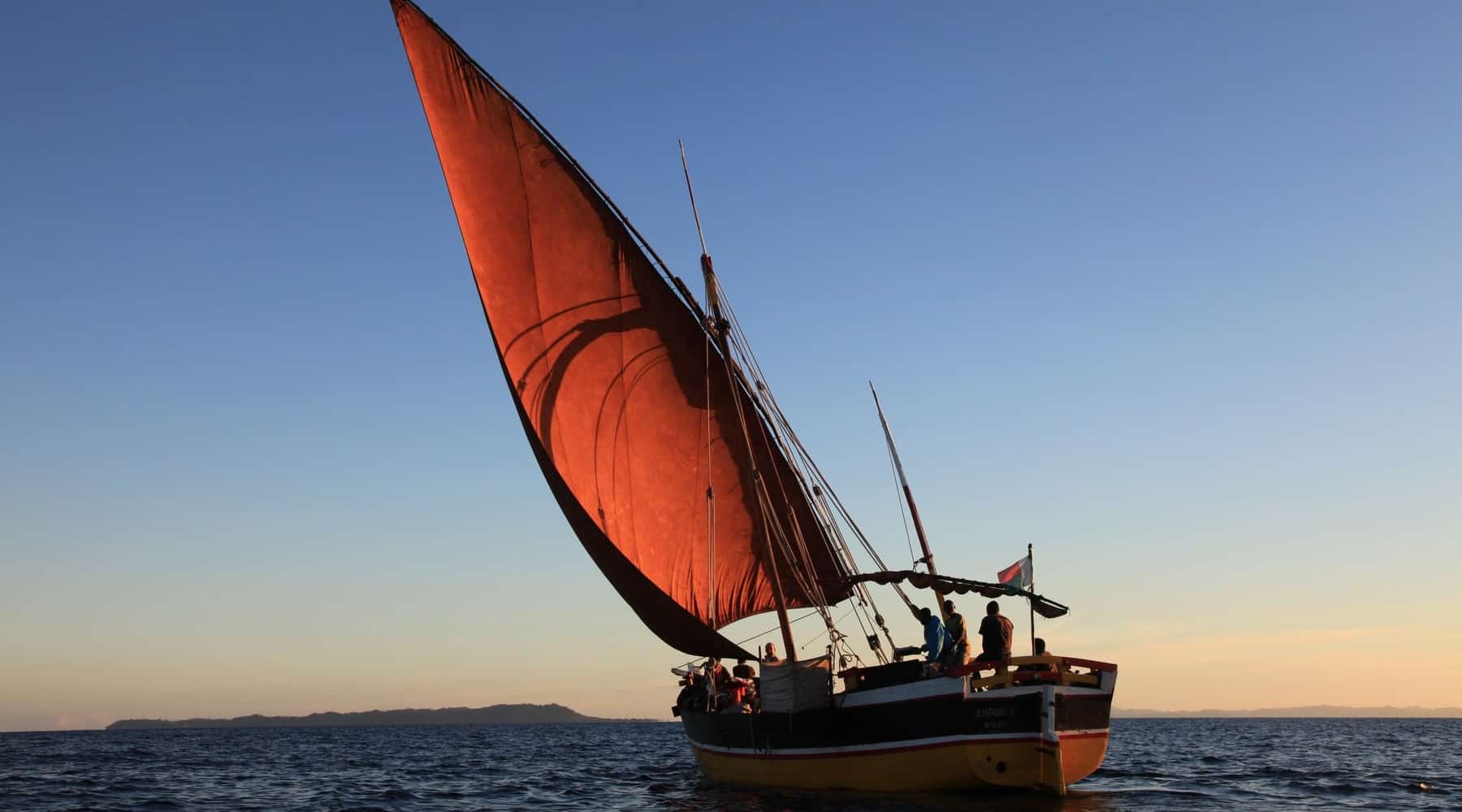
What is a dhow?
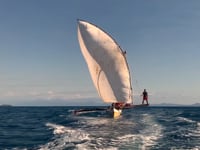
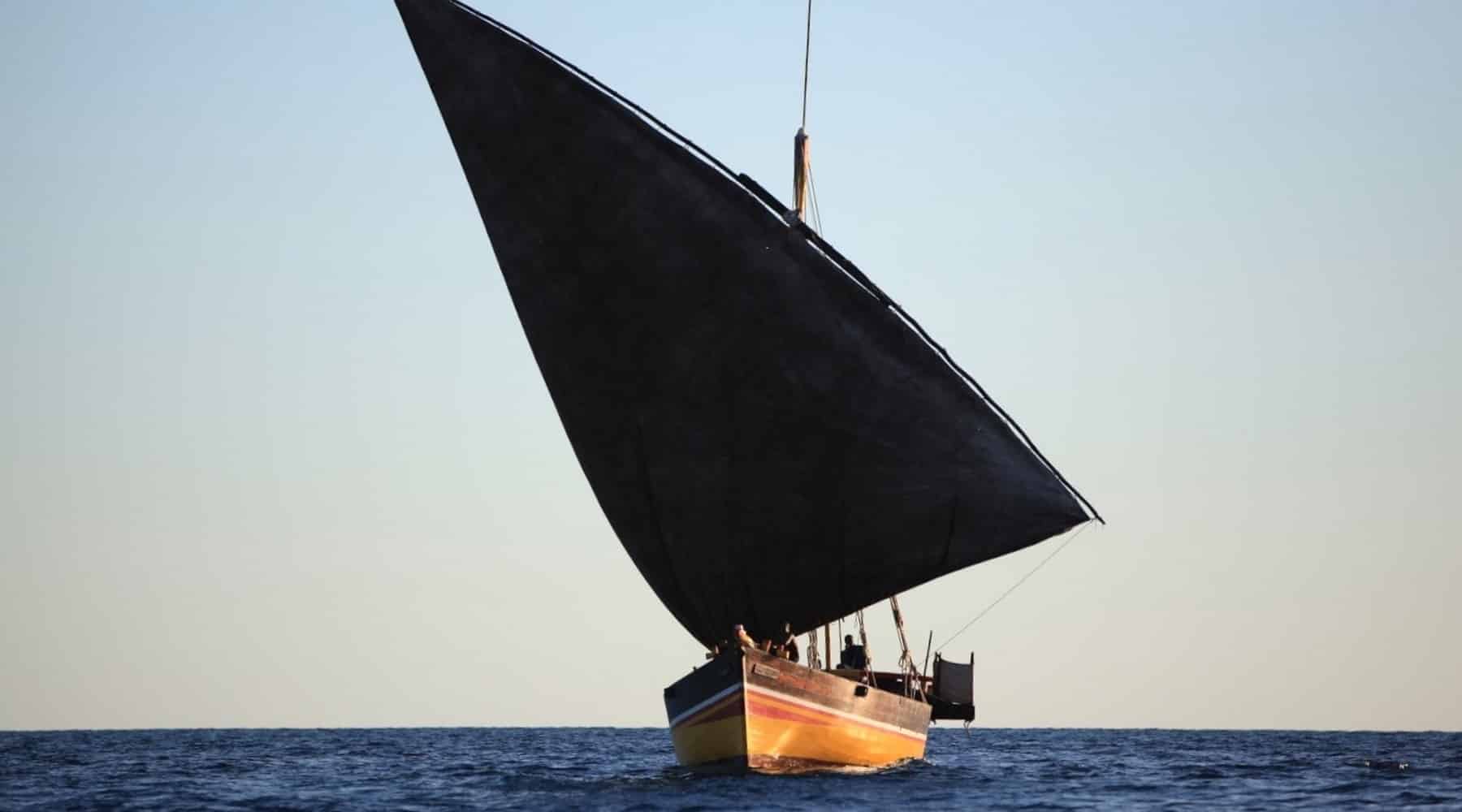
They're sturdy, good-walking boats designed for transport, and their shallow draught enables them, like pirogues, to squeeze in anywhere. They are wide (about 1/3 their length), well defended at the stern, with a pointed bow, and carry one (or two) triangular sails (rather like Latin sails) leaning on one (or two) masts inclined considerably forward. In fact, it's the shape of this sail that determines the name dhow. Still very much in evidence on the seas around the Gulf of Aden and the Horn of Africa until 1970, the various dhow variants were unable to keep up with the race for progress, and today have all but disappeared in favor of motorized wooden hulls.
Unaffected by the great economic upheavals of the late twentieth century, northwest Madagascar is the last region in the world where hundreds of dhows still sail exclusively.
Even today on Nosy Be, the sight of these sails in the shape of birds' wings hanging over the horizon is an integral part of our daily seascape.
Once traffickers in slaves, weapons, pearls and gold, these ships, straight out of a tale of a thousand and one nights, have slowly adapted to Madagascar's particular history. Even today, they are still used to transport all the traditional building materials from the bush (ravinala leaves for walls and roofs, raffia, mangrove poles, planks, rafters and hardwood planks), as well as rice, coconuts, oranges, bananas, dried fish, zebus, goats and chickens.
At the start of the 21st century, dhows play an active role in the development of Nosy Be and the town of Majunga, thanks to their role as transporters.
Alefa's dhows
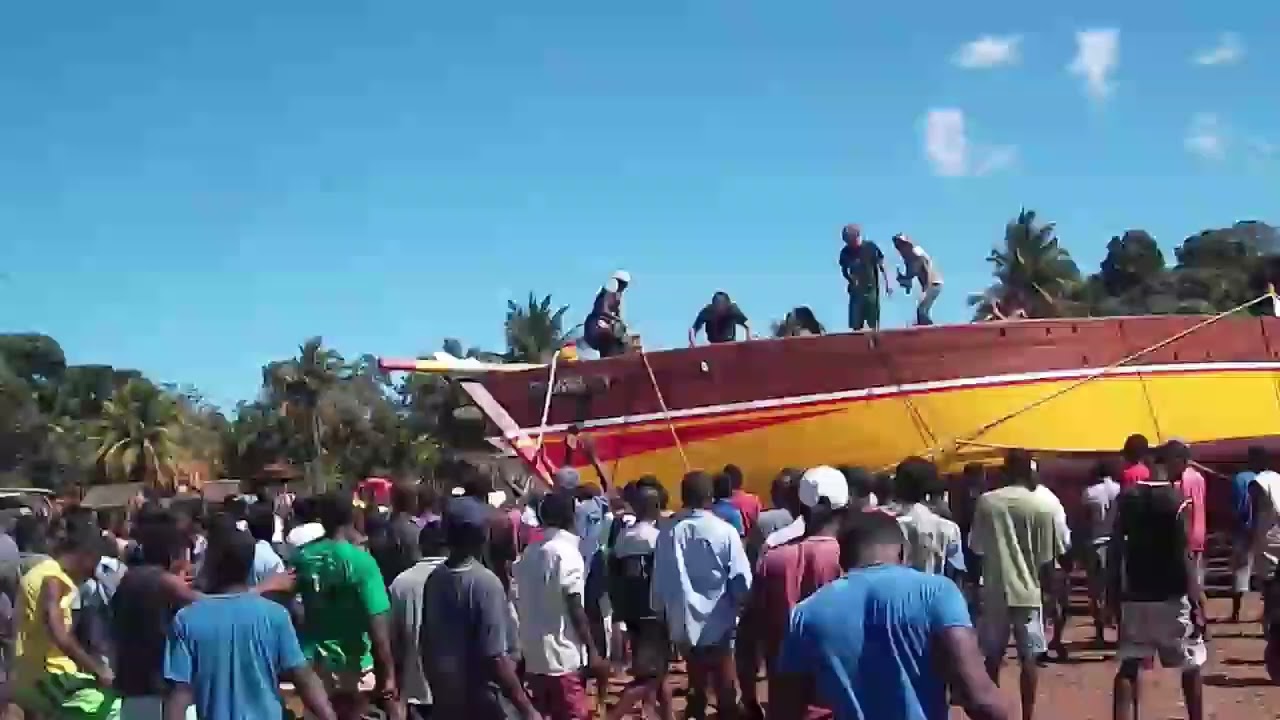
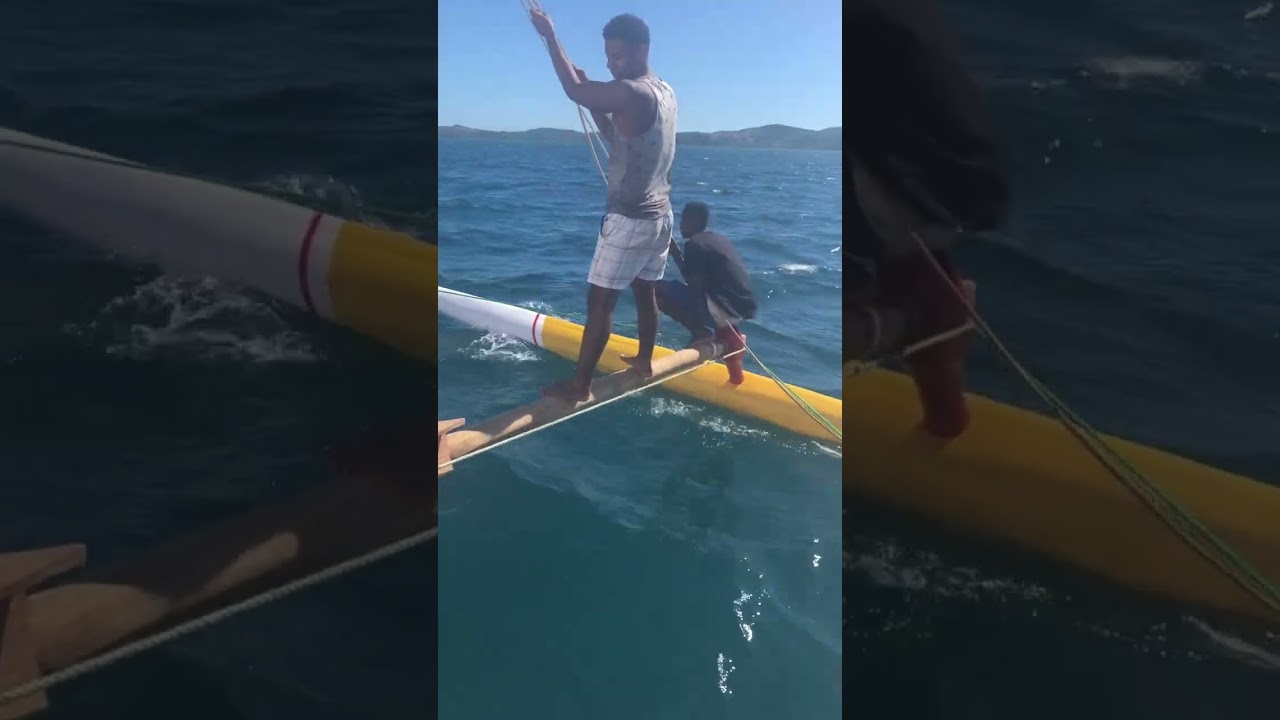
Alefa works with two large Sakalava dhows: Karakory and Mahatsara. These two dhows were built entirely with traditional tools by Sakalava carpenters. Their construction, without any prior plans, took several years, during which nothing was spared to make them the two most beautiful dhows in the region. Everything on board was designed to take exotic dreams of discovery beyond the norm. Six crewmen, an enormous space, African wool carpets, chiselled trays and copper teapots, comfortable cushions, huge wooden pulleys and thick ropes make up the daily décor of a dhow voyage, in the generous shade of an immense cotton canvas.
Our dhows, while offering the same services on land as in a pirogue, will plunge you even deeper into a universe of another time, another world.
Mahatsara

- Overall length: 16.50 m
- Width: 5.05 m
- Draft: 0.90 m
- Sail material: cotton
- Sail area: 145 M2
- Weight: approx. 30 tonnes
- Load capacity: 30 tonnes
Karakory

- Overall length: 14.50 m
- Width: 4.65 m
- Draft: 0.80 m
- Sail material: cotton
- Sail area: 115 M2
- Weight: approx. 20 tonnes
- Load capacity: 20 tonnes