



Useful info
Madagascar Fauna and flora
Until the beginning of the 2000s, very few scientists were interested in this 320 km stretch of coast without any road access (not even
While this is a typical Alefa discovery cruise, it adds ingredients that make it different, even more focused on the nature and culture of this extraordinary region.
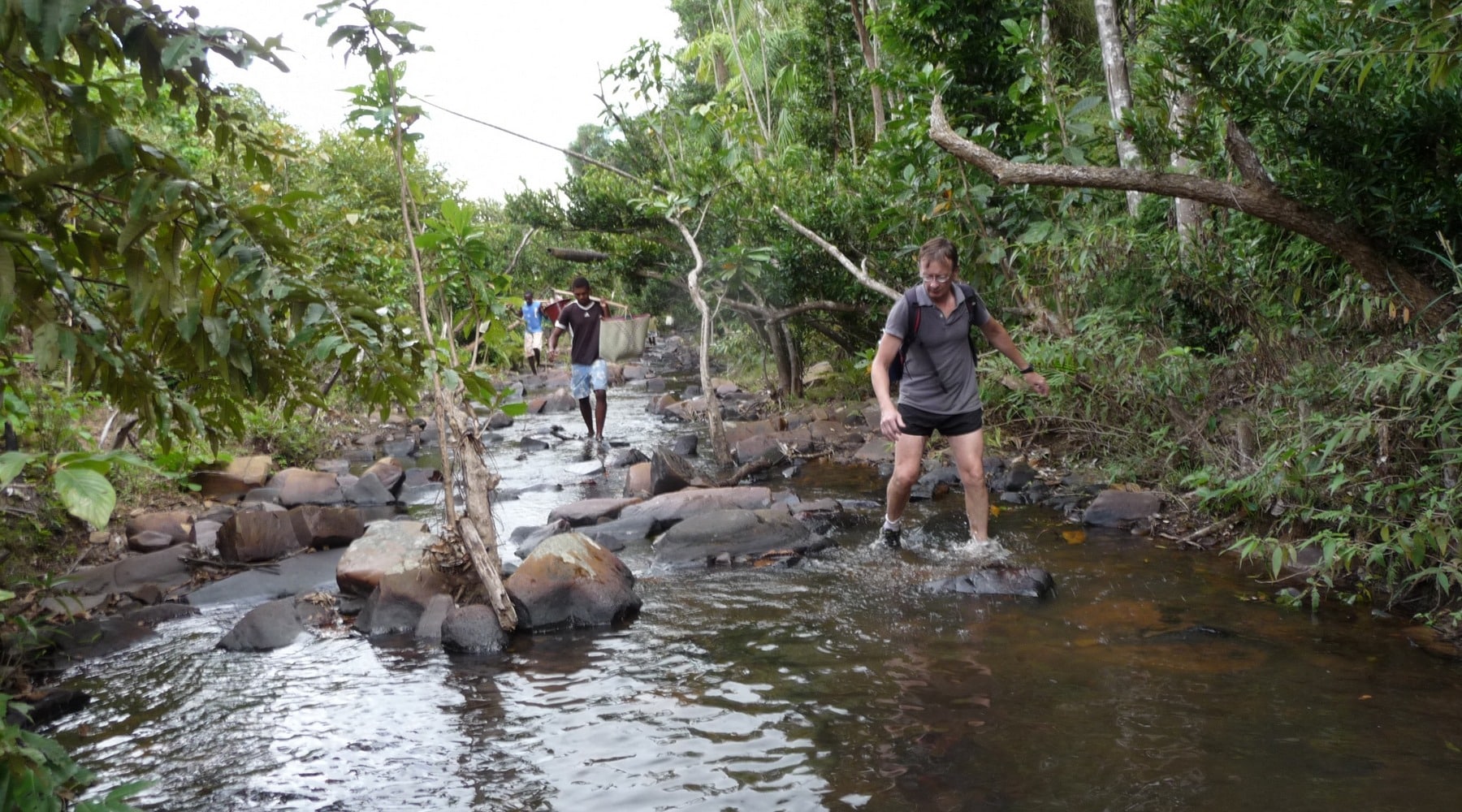
5 days in classic Alefa mode, alternating with 3 days resolutely turned towards the land to discover what is normally inaccessible to us set back from the sea. These 3 days of trekking spread throughout the trip will enable us to make incursions into the heart of an even more unknown and mysterious bush. A maximum of 5 to 6 hours' walking during these days of trekking focused on discovering the people and their activities in general, but also on observing the flora and fauna. The average walking time is 3 to 4 hours in the morning and two hours in the afternoon, with lunch en route.
Even if these trips are "a little more physical" than the others presented, they still retain the epicurean, playful, spontaneous, casual, passionate and romantic side that characterizes all our travels.
A very special Alefa trip, for those who like to walk.... in a different way.
To be enjoyed without moderation!
This example of a cruise only serves to give an idea of the constitution of a trip according to its duration. It should not be taken literally. The “scheduled” stopovers can be modified at any time by our guides according to the direction of the wind, the tides or simply the desires of each one. The goal of the game is to make you live the most beautiful trip possible in a truly wonderful world that we are still the only ones to frequent…..
7h00 du matin, embarquement à bord du boutre. Nous prenons le petit déjeuner sur notre bateau pour profiter au mieux du calme matinal. Nous remontons l’ancre vers 6h45 pour environ trois heures trente de traversée avant de rejoindre notre premier site de plongée. C’est notre premier jour également, et trouver du poisson n’est pas encore une nécessité. C’est donc surtout pour le plaisir des yeux que nous plongeons en apnée au dessus de nos premiers coraux (plongée entre deux et cinq mètres de profondeur). Chacun prend sa place à sa façon, nous sommes vraiment partis, nous sommes en pleine brousse, et l’immense Grande Terre n’est plus un paysage lointain. Vers 11 h00, nous repartons vers le Sud pour rejoindre notre premier bivouac. Le vent thermique quotidien vient de se lever, et c’est à la voile (si le vent est dans le bon sens !) ou au moteur que nous rejoignons notre premier bivouac. Anjiabé est une longue plage de sable blanc bordée par une cocoteraie abandonnée. Un site aux marées basses extraordinaires où vivent plusieurs dizaines d’espèces d’oiseaux, pour la plus part endémiques (uniquement présents à Madagascar). Nous déjeunons à bord, au dessus d’un lagon damé de bleus et de verts . Débarquement vers 14h00, et, après une bonne douche à l’eau douce au puits du coin, petite balade pour découvrir un peu mieux ce qui nous entoure et ce qui nous attend demain : une montagne verdoyante de 700 m de haut là bas, de l’autre côté de la baie ! Apéro dans les lumières du couchant, repas, causeries, rêveries et bonne nuit à tous !
(6:00 walk in total) Breakfast at 5:30, then at 6:30 we board of the Annex to cross a very sheltered bay 2 miles wide. 20 minutes later we landed on the beach Milorano, the starting point of our walk of the day. The goal is to make this beautiful mountain called Andranomatavina (where water is abundant). We leave to the discovery of a particularly important sacred gully for Sakalava religion is like shamanic .Protégée since ancient times by many “fady” (taboo), primary forest is remarkable. After two hours of walking, we reached the foot of the mountain surrounded by magic. Whites who viewed this highly sacred place can be counted on the fingers of two hands at most. Large mossy rocks, trees, and … leeches. What happiness! Here, the endemic plant is very close to 100%. Everything becomes extraordinary. We walk quietly in this universe by simple but splendid. We lunch at the edge of the stream, and we listen in our own way this absolutely unique forest in the world. Around 14:00 we start our walk back to Milorano where our boat awaits us. During our walk sailors changed their place of bivouac, and it is in the village of Amporaha, close, our new camp is reaching. After 5 minutes of crossing, surrounded by the lights of the sunset we land. Village meetings, shower, rest, drink and meal. We begin to get to know each feels that the trip has really begun. See you tomorrow!
Sunrise 6:00 am, breakfast and boarding for yet another day. We walk along a fringed beaches and forest more or less intact massive coast. A distinction is sometimes a hamlet, someone walking on a huge beach, the scenery is elegant, graceful even. We dive on the road in a completely different underwater world of two days before, and then around 11:00, sailing probably we reach still further south Ambatofotsy. This is a small village which has the distinction, in addition to its natural beauty, to host the royal residence and a “temple” in relics. Attention here nothing spectacular, although we are in the heart of the small Sakalava kingdom where the king reigns Mohamady which owes its name to an old Arab family history, wars, and of course kings! A territory shaped narrow ribbon of seventy kilometers in twenty. The role of the king essentially concerns the relationship between the meek ??and the sacred or small claims in the daily lives of honest people, nice, thin, shy, reserved, often spontaneous and sometimes unbridled without reservation. We land at Ambatofotsy in the early afternoon, and we set up camp in the heart of this quiet village. The shower is different again, is that the village … .. Some children, raffia, so this Malagasy light, laughter, singing weird invisible bird, the surf of the sea in the background, and this vastness, anywhere . Sunset is not far … .Contemplation … .décontraction … and the rest, as usual, almost.
(6:00 walk in total) Sunrise 5:30 am, and after a good breakfast, we head Ambariojeby, big town unreachable by road, but representing a major agricultural basin in the region. At the beginning of our walk we went around a large pool of mangroves before tackling some hills discovering a promising landscape. The region is semi mountainous, interspersed with raphières (raffia palms together), shrub forests, small villages, fields and stories. We are surrounded by red and green, but we walk on a major trail used for centuries by locals. We meet people, guinea fowl, lemurs, zebu, smells, sights, and our reading of this watermark Sakalava life still stuff a little more. We arrived late morning in this world is grown under large shade trees, coffee, pepper, vanilla, orange, and we walk in the middle of rice, cassava, groundnuts, of bananas, and sugarcane. Lunch outside the village, surrounded by a few curious children: they never see a foreigner, and our presence surprised everyone here. We leave this country quiet around 14:00 because we did two and a half hours before finding our coconuts. We have the full head, a little tired too. But a drink is welcome with its accompanying delicacies. The nocturnal lemurs make a lot of noise, but it does not surprise us anymore. Today we talk, we talk about tomorrow, we speak … .Good night everyone!
Up as usual, and around 8:00 we are back on our dhow just waiting to move forward. Today we go to the largest island of the archipelago of Radamas: Nosy Berafia. After two hours of crossing we dive on the edge of this island just off our bivouac point of the day. Fishing, spearfishing and swimming before returning to the small lagoon Maroentendry. This small village is our door to approach this vast island well Malagasy red. But beyond this earth so characteristic Nosy Berafia is a hilly island and semi woody, long and narrow, with little height (150 m maximum). Since the beginning of the century, the French and the Indo-Pakistani led large agricultural projects on this fertile land. Economic failures of Madagascar and its sidelining of international trade eventually blunting these beautiful development companies, and Berafia returned to what it was: a beautiful island, and the absolute focus of the local Sakalava religion . We disembark in the early afternoon. Lounging, short walks talks and swims occupy us until sunset before enjoying the rest of our day’s catch. Good dreams under the stars, and good morning! …. As they say in Malagasy.
(4:00 walk in total) Sunrise around 5:00 am to make the most of the mild weather in the morning. We are in the north of the island and walk south. Quartz is at ground level, sometimes even clear amethysts appear .Des fruit-eating bats in the tens, even the day of small quail tubby few meters in front of our feet, while green pigeons which oddly sing, and our endless guinea fowl which fly like pheasants. We meet life in all its forms before arriving at the foot of the sacred town Mahabo. Here are buried the kings, princes and princesses of the royal lined concerned. Very few whites were able to visit this place, too, we have some guidelines to follow to avoid disturbing this highly sacred place. Mango trees are centuries old, and some old men also appear. We are at the top of Berafia, and the view is breathtaking … it’s beautiful. We have lunch at the seaside just below before moving westward “Magazin” which is not a course. It must mean an old colonial term for equipment storage sheds and other agricultural products. An hour’s walk amid the scent of ylang-ylang, pepper and vanilla other more or less abandoned before overlook the sea where our dhow ahead. We contemplate the landscape of Africa up the former home of the director of concession counter; perfumes prewar perfume from another time as evidenced by the very eve carcass of a tractor breathless. After visiting the village, we return to our dhow to reach the shortest and the sea, our camp north of the island. Shower, bathe, drink, relaxing, fun and talks occupy us all until our eyes close, each at our own pace. See you tomorrow!
After the usual breakfast and loading the dhow, we leave for about three hours crossing one hour of diving or fishing before arriving in the late morning to Ambariomena.
It’s kind of Malagasy fiord quiet as a lake, surrounded by small orange sand beaches, dominated by dense primary forest. This fiord sinks Then deep into a maze of mangroves to finish River at the foot of mountains covered with rainforest. We set up our camp, this time at the entrance to the estuary, and then, if the tide allows, we go more or less deeply an inlet … water becomes increasingly thin amid this tangle of mangroves surreal … life, though intense, is discreet … here, almost everything is nurseries, everything is strange, fragile! We meet two hours later our camp in the raking light of dusk. The landscape is golden, light is almost too beautiful, she bewitches us …
It seems that all these green and the roses are edible. The evening will find us for the last time on this trip about with sweetness and harmony, and we contemplate what the bay looks for centuries: dhows, schooners, adventurers and pirates who come to hide the vagaries of the sea. fragile Small fires at night, distant laughter, smells of smoke, silence, feeling that little has changed. … The feeling that we are no longer quite the same either.
Today, up quiet a bit later than usual. But the journey is not over because we have a few hours ahead of us before joining Nosy Be. We did not really have to hunt and fish for our fish today, and we will mostly try to visit a particularly beautiful and accessible coral site. We took the opportunity to the fullest, and those who want to stretch their legs on a nice beach can. Aperitifs, tapas, memories and laughs accompany our meal before sitting comfortably on our rugs and cushions we raise our sails. The song of the ropes, the magnificent scenery, the creaking pulleys under the huge yard, heavy cotton sails … .Tout magically take us back to the dawn of time … for a few more hours. Quietly pushed by this delicious thermal wind, we reach Nosy Be in the lights of the sunset to 17 h 00.

Voyage de 5 jours extraordinaire en boutre avec un équipage à la fois très professionnel, chaleureux, à l’écoute mais aussi discret pour nous permettre de vivre pleinement ces moments en famille. Nous avons adoré les heures en boutre à contempler le paysage, l’installation du campement, les nuits à la belle étoile, les rencontres, les repas… Nous vivons depuis trois ans à Madagascar et c’est sûrement la plus belle expérience que nous ayons eu à vivre jusqu’ici. Déconnexion totale. Un grand merci à notre équipage de choc (dont les enfants parlent encore souvent): Simon, Mando, Majid, Bebeto Silvano et bien sur Jacky notre guide.
Alice et Guillaume

Bonjour à toute l’équipe,

Bonjour,
Je tenais à te faire un retour de notre voyage à bord de Karakori.
Tout d’abord nous garderons un souvenir ému de son équipage. Jacky, Simon, Babe, Stéphane, Claude, René ont été incroyables.
Nous ne nous sommes jamais sentis comme des clients mais comme des invités.
Ensuite, les ti-punchs et les repas étaient délicieux.
Enfin la découverte de la côte et les bivouacs dans les villages nous ont émerveillés.
J’espère donner envie à quelques amis voyageurs de découvrir cette aventure.
Tu trouveras plus bas un lien de téléchargement de quelques photos dont celles du bateau, orchestrées par Jacky.
Un grand merci et bon vent.
Arnaud

Bonjour !

Hello to the Alefa team!
We ended our stay in Madagascar with our heads full of memories, at the end of an exceptional trip with your crew. Everyone was incredibly kind to all of us, and Jacky will always be remembered for his kindness and sense of sharing. We learned an enormous amount from him.
Abdou delighted us with his tasty dishes, Mando and Majid were discreet but super efficient, Silvano with his laugh (oh boy, where are the blisters?) and his unforgettable wiggle, and Alberto, phlegmatic and gentle.
Dom, Angie, Nicolas, Jo Black, Hafsa, thank you also for your support in the run-up to this incredible human adventure.
We've seen Alefa's work in the villages (wells, solar panels, playgrounds), and your commitment is remarkable.
Keep up the good work and thanks again for the six of us.
Christian, Alex, Muriel, Emmanuel, Jeanne and Manuela

Hello,
I think these few days aboard the Pirogue are one of our best memories of our trip to Madagascar!
Thank you for sharing this timeless experience with us.
We'd love to go back in time and return!
We've shared the address with our friends in Reunion who are planning to visit you, probably after the elections!
Here are a few photos that you can share if you feel like it!
Misotcha betsika!!
Amélie Benjamin and the 3 artists
Non-private rate indicated / day / pers.
Half-price for the children
*Alefa commits to reducing the tariff to 140 € / day / person dhow if others join the circuit.
Non-private rate indicated / day / pers.
Half-price for the children
*Alefa commits to reducing the tariff to 125 € / day / person canoe if others join the circuit.
Until the beginning of the 2000s, very few scientists were interested in this 320 km stretch of coast without any road access (not even

The island of Nosy Bé, in the northwest of Madagascar, is the starting point for our trips to the Malagasy “Great Land” Our universe

We systematically organize a friendly briefing the day before each departure around 4 p.m. in our premises. This is very important, regardless of the duration

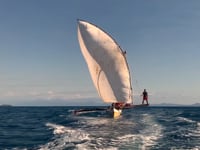
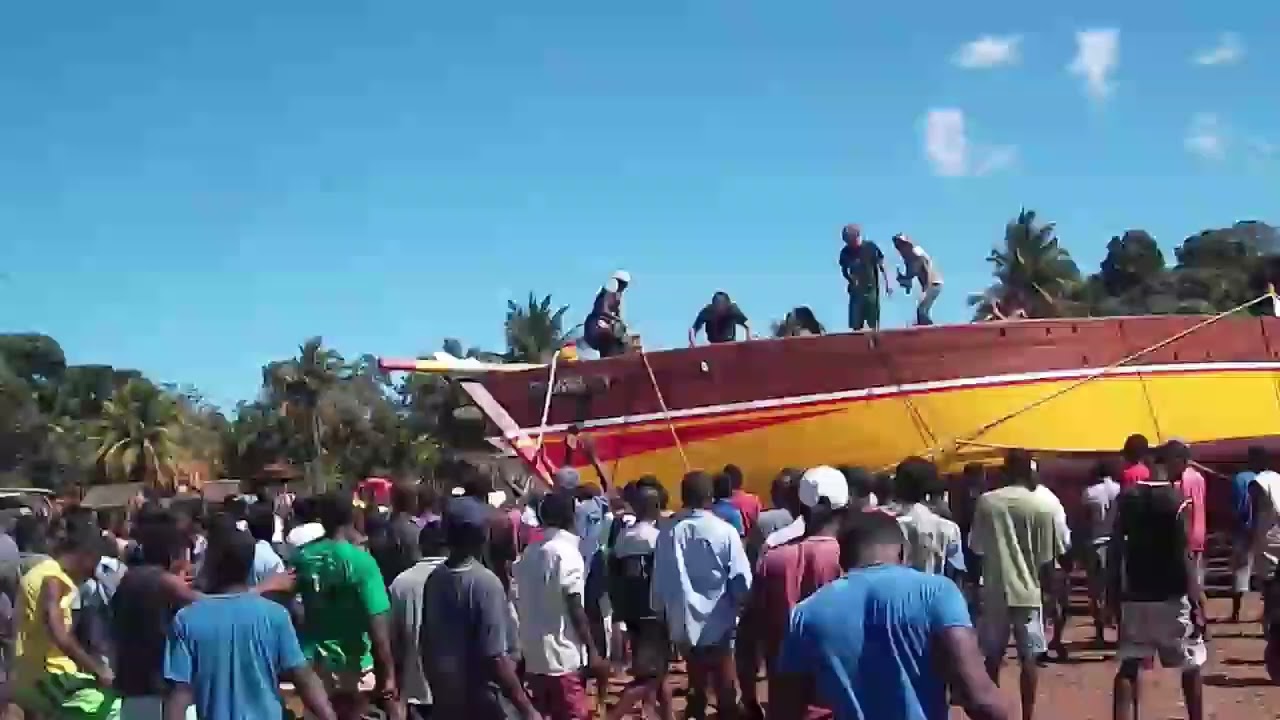
What is a dhow? These are solid, good-running boats, intended for transport; and their shallow draft allows them, as

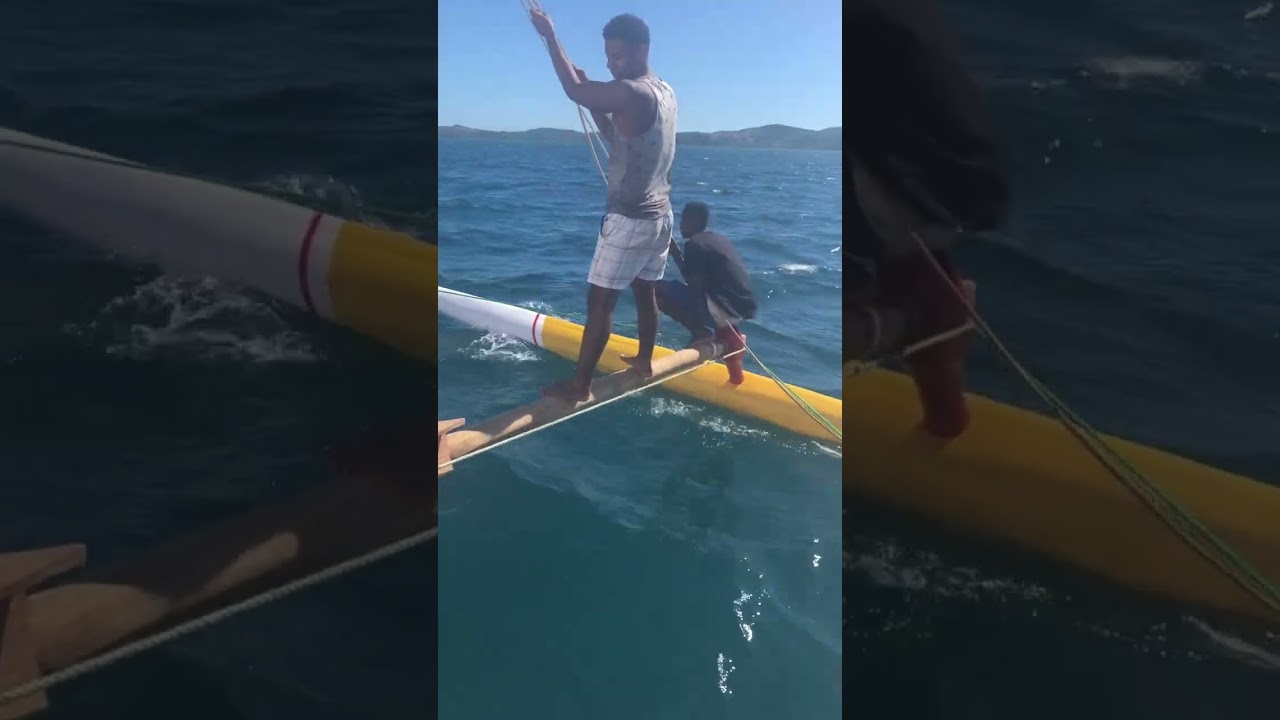
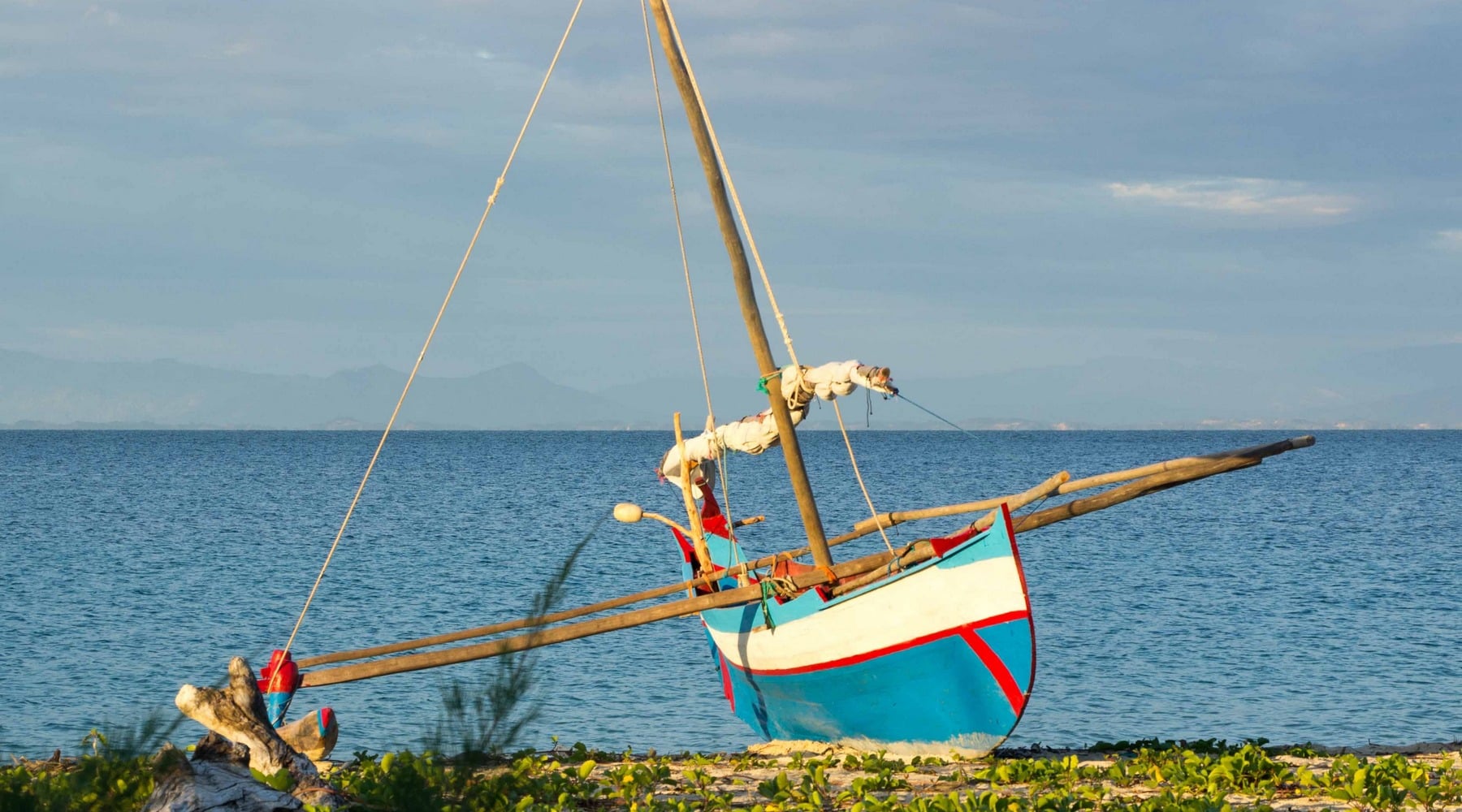
The Sakalava pirogue is a member of the large "outrigger pirogue" family found mainly in Asia, Polynesia and South America.

During each of the cruises we offer in northern Madagascar, we get up early (about 6:00 a.m.), because we have to leave early.