



Useful info
The pirogues of Madagascar & Alefa
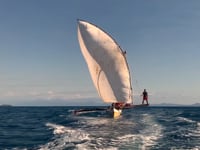
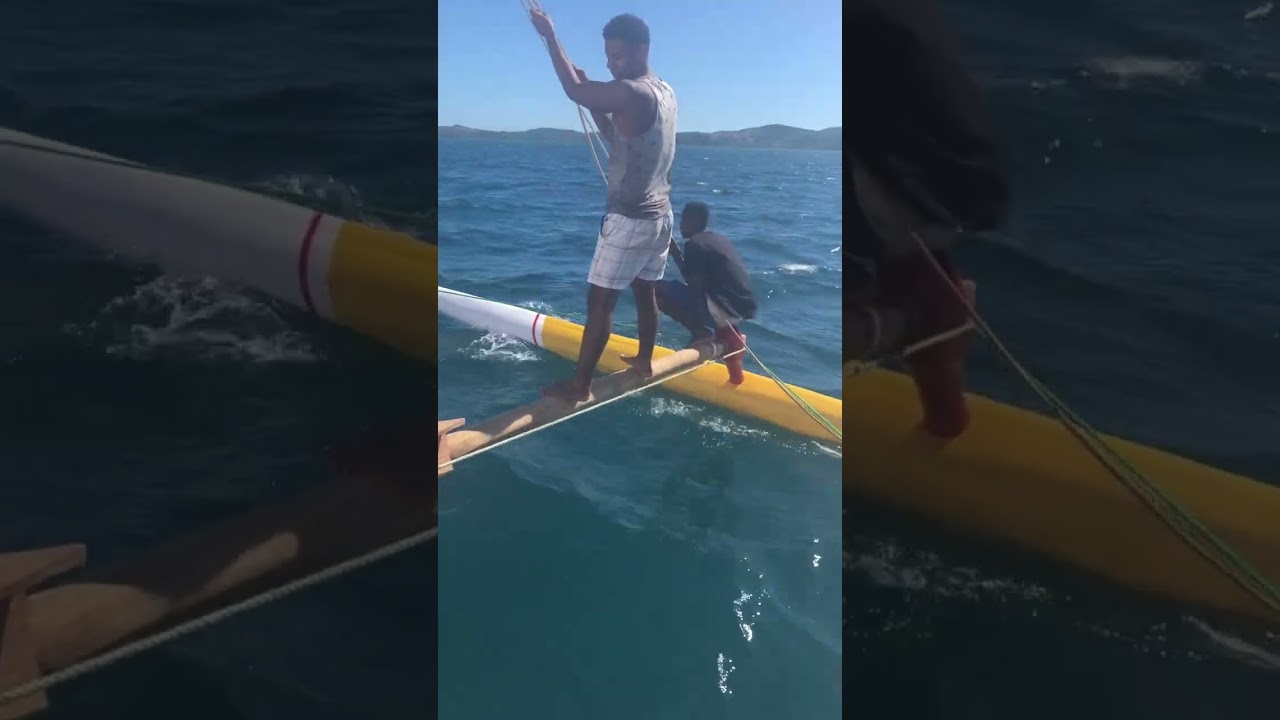
The Sakalava pirogue is a member of the large "outrigger pirogue" family found mainly in Asia, Polynesia and South America.
This example of a cruise only serves to give an idea of the constitution of a trip according to its duration. It should not be taken literally. The “scheduled” stopovers can be modified at any time by our guides according to the direction of the wind, the tides or simply the desires of each one. The goal of the game is to make you live the most beautiful trip possible in a truly wonderful world that we are still the only ones to frequent…..
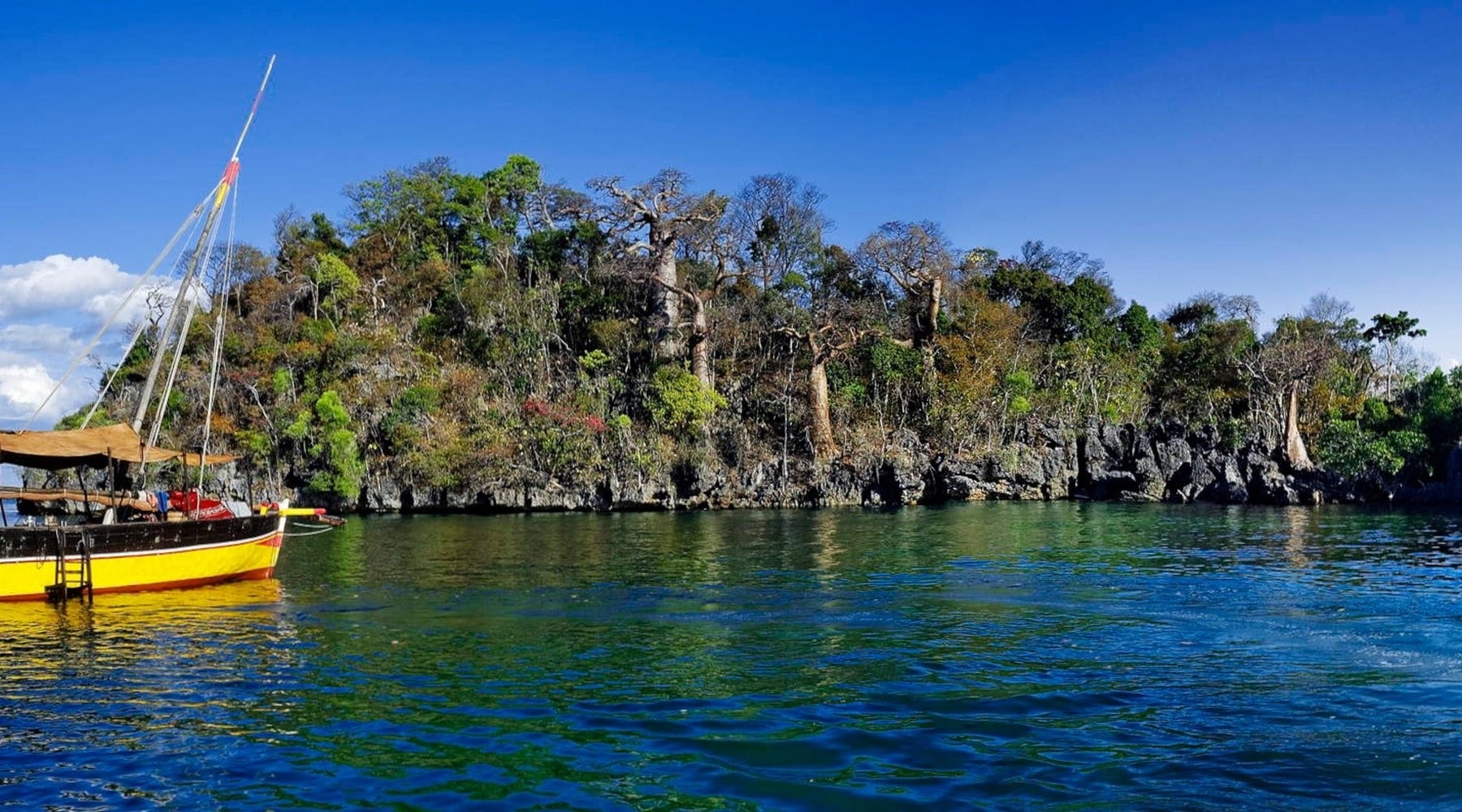
Nous embarquons à bord d’un boutre Sakalava ou d’une grande pirogue traditionnelle à voile (en fonction de votre choix ! ) pour partir à la découverte d’une région où la mer représente la seule voie d’accès. Rendez-vous à 7H00 dans nos locaux au bord de la plage pour un petit déjeuner sympa. Nous quittons Nosy Bé pour la petite Île d’Ankazoberavina (1h45 de traversée tranquille). Baignade, plongée apnée et découverte d’un monde sous-marin incroyablement riche et varié, gentil et coloré. Puis après une courte traversée, atterrissage à Anjiabé, longue plage de 3km. bordée par une cocoteraie semi-abandonnée, un site aux marées basses extraordinaires. C’est là que nous bivouaquons. Après un apéro et un repas de fruits de la mer, sieste, baignade et pour ceux qui le désirent, ballade pédestre pour observer les nombreuses espèces d’oiseaux, pour la plupart endémiques à Madagascar. Couché de soleil, apéro, repas… Et bonne nuit !
We set off early in the morning for a two- to three-hour crossing along a splendid coastline with a varied, wooded landscape. Along the way, we take a dive at a completely different site from the previous day. Then, under sail or motor, we continue our journey to Amtambao. This is a seemingly inaccessible arm of the sea, blocked by sandbanks at low tide. The poetry of the place is indescribable. We bivouac on the edge of a lagoon on a sandy promontory planted with shrubs and coconut palms. The forest typical of this region is right next to us. Behind, in the background, a marsh where it's easy to observe hairy herons, green pigeons, mantled falculids, wild guinea fowl, teal and Cuvier's rail. From here, two arms of the sea meander through the mangroves towards the vastness of the forest and... crocodiles. In the afternoon, swim or take a stroll around the nearby village. In the evening, aperitif, meal and excellent evening by the light of the storm lamps.
Free rise (for once!) except for those who want to observe the mythical guinea fowl in its morning wanderings. The day is organized according to the spirit and desire of the group: Long walk in the surroundings, river reconnaissance (depending on tide times), visit to another village, diving, fishing, lazing around, etc...
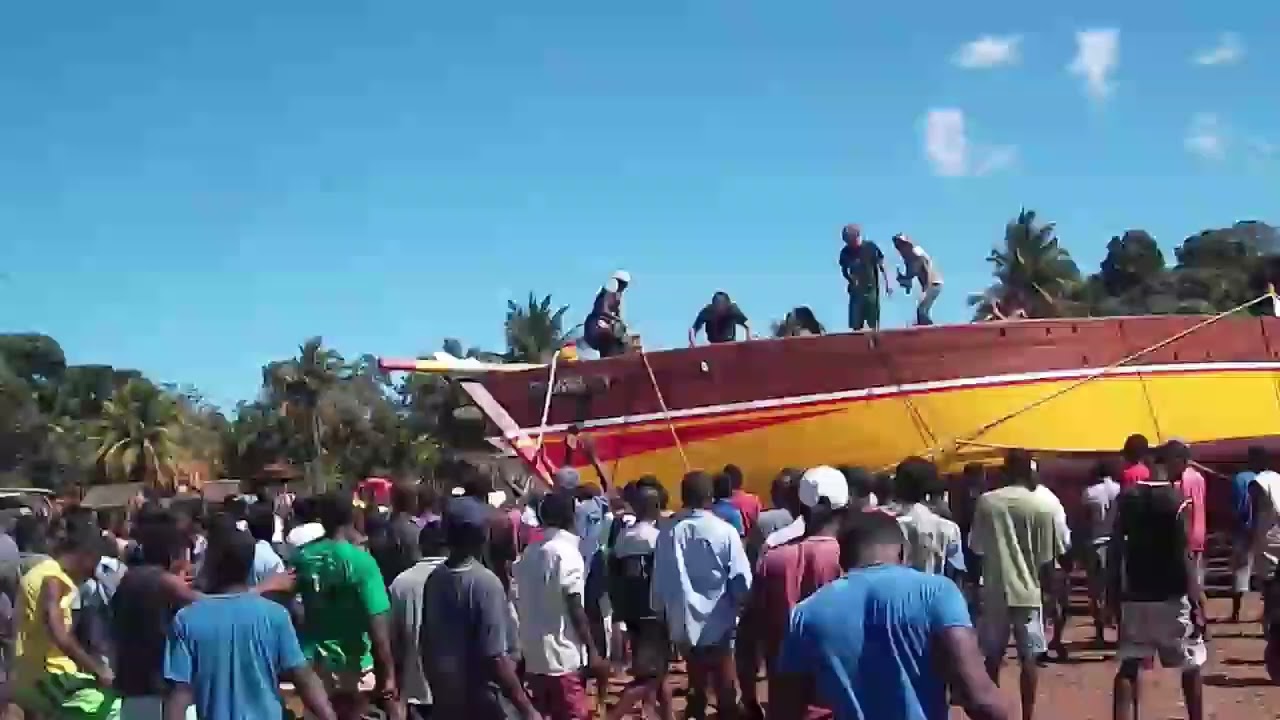
Depending on the tide, we leave early in the morning for the northernmost island of the Radama archipelago (1h3O crossing). Nosy Ambariopôtaka rises to an altitude of 166 metres, creating a whole new landscape. The sand turns white and we bivouac facing the vast ocean of the Mozambique Channel. Nearby, a small hamlet and one or more dhow hulls under construction rest on a bed of pink and white periwinkle. André, the Sakalava carpenter, builds them according to age-old traditions. The whole is bordered by a dreamy lagoon and a patch of primary forest on the opposite side. Scuba diving, hiking and lounging.
After an early start, we head for Nosy Berafia (45min), the largest island in the Radama archipelago (2,500 ha). The southern half is covered with more or less abandoned plantations (coffee, pepper, ylang-ylang, chili pepper), themselves dominated by tall shade trees. Enormous fruit bats by the dozen, green pigeons, intoxicating perfumes, the colonial house of the "commander" of this ex-concession and a large village. Everything to immerse us in the exotic colonial charm of the 1920s. A dive into a very different and rich site. Visit to an old, small bush distillery. Discover this amazing island on foot. Restocking some of our basic foodstuffs.
Embark in the morning for this isolated island, whose name means "easy land" in Malagasy. Often deserted, Antanimora is sometimes inhabited by sea cucumber II divers who, for a few days at a time, give the island a gold-digging atmosphere. Their smiles and hair, bleached by the salty sun of the open sea, speak volumes about their life as nomads of the seas. In this curious atmosphere, we stroll along the filaos (tropical conifers) and climb the grassy slopes, where the sparse aloes and bunches of mango trees place our imagination somewhere between Africa and Mexico... the panorama is grandiose and unsettling. Diving and underwater fishing around the island. Hiking and climbing in the hills.
Sunrise over the grandiose landscape we contemplated yesterday. We organize the morning according to the constraints of the tour: foraging for food, replenishing water supplies, washing clothes, walking, swimming, lounging... In the afternoon, we set off for the village of Ankatafa. Normally we have wind and the trip takes around 2 hours under sail. We arrive in the late afternoon in what appears to be a less idyllic setting. Gone are the sands, replaced by pebbles and mangroves. We camp in the village, slightly set back from the sea. The forest seems absent, but let's trust our guide; we're about to discover the secrets jealously guarded by these austere hills. Aperitif, meal... Good night. Around 6hoo, we set off for a hike in the area. Here, forest and rice paddies stretch for miles between two hills. The Sakalava people of this region are different from their neighbors further north. More reserved, they live in a harsher, less simple world, and the omnipresent immensity that surrounds them has shaped them in the image of the mangroves: supple and humble. The afternoon unfolds according to the people we meet and our desires, because at this stage of our journey, we're really all in this together...
We set sail early to the north, passing the eastern part of the Radama Islands basin. Along the way, we dive at some strange sites with coral resembling sand roses... Depending on the fishing, we set off again later or later in the morning for Tsangazira. The people here grow rice, manioc and corn, and their kindness is once again a breath of hope in this world. The region is mountainous, offering easily accessible and magnificent views of the Radama archipelago.
Morning departure and diving en route (2 or 3-hour crossing). Arrive in late morning at Ambariomena, a sort of tranquil Malagasy fjord like lake fringed by small orange sand beaches, dominated by a steep forest criss-crossed by pinkish sandstone tongues. This arm then plunges deep into a maze of mangroves, ending up as a river at the foot of mountains covered in primary forest. We set up camp in a delightful little village and, depending on the tides, either take a pirogue upstream in the afternoon or stroll on foot through this place where greens and pinks sing loudly in harmony. In the evening, enjoy an aperitif, a meal under the stars and a good night's sleep, lulled by the sounds of the village.
Early start as usual for a day full of surprises. We take a dip along the way to freshen up and grab a bite to eat. We take the opportunity to see what we hadn't seen on the outward journey. The bay that shelters the beautiful village of Marotony ("many personal sacred trees" in the Sakalava language) will hold us for an hour or two, depending on our mood and the tide... We'll eat on the edge of an island with magnificent undersides, just to engrave these marvellous underwater colors a little deeper in our memories. Around 2.00 p.m. we set sail for the thirty kilometers to Nosy Bé. A few delightful hours in the midst of a grandiose landscape... the rustle of the water against the float, the song of the bow... between sky and sea, half bird and half boat, driven by the golden rays of an ever-changing setting sun, we reach Nosy Bé at around 5.00 pm.

Voyage de 5 jours extraordinaire en boutre avec un équipage à la fois très professionnel, chaleureux, à l’écoute mais aussi discret pour nous permettre de vivre pleinement ces moments en famille. Nous avons adoré les heures en boutre à contempler le paysage, l’installation du campement, les nuits à la belle étoile, les rencontres, les repas… Nous vivons depuis trois ans à Madagascar et c’est sûrement la plus belle expérience que nous ayons eu à vivre jusqu’ici. Déconnexion totale. Un grand merci à notre équipage de choc (dont les enfants parlent encore souvent): Simon, Mando, Majid, Bebeto Silvano et bien sur Jacky notre guide.
Alice et Guillaume

Bonjour à toute l’équipe,

Bonjour,
Je tenais à te faire un retour de notre voyage à bord de Karakori.
Tout d’abord nous garderons un souvenir ému de son équipage. Jacky, Simon, Babe, Stéphane, Claude, René ont été incroyables.
Nous ne nous sommes jamais sentis comme des clients mais comme des invités.
Ensuite, les ti-punchs et les repas étaient délicieux.
Enfin la découverte de la côte et les bivouacs dans les villages nous ont émerveillés.
J’espère donner envie à quelques amis voyageurs de découvrir cette aventure.
Tu trouveras plus bas un lien de téléchargement de quelques photos dont celles du bateau, orchestrées par Jacky.
Un grand merci et bon vent.
Arnaud

Bonjour !

Hello to the Alefa team!
We ended our stay in Madagascar with our heads full of memories, at the end of an exceptional trip with your crew. Everyone was incredibly kind to all of us, and Jacky will always be remembered for his kindness and sense of sharing. We learned an enormous amount from him.
Abdou delighted us with his tasty dishes, Mando and Majid were discreet but super efficient, Silvano with his laugh (oh boy, where are the blisters?) and his unforgettable wiggle, and Alberto, phlegmatic and gentle.
Dom, Angie, Nicolas, Jo Black, Hafsa, thank you also for your support in the run-up to this incredible human adventure.
We've seen Alefa's work in the villages (wells, solar panels, playgrounds), and your commitment is remarkable.
Keep up the good work and thanks again for the six of us.
Christian, Alex, Muriel, Emmanuel, Jeanne and Manuela

Hello,
I think these few days aboard the Pirogue are one of our best memories of our trip to Madagascar!
Thank you for sharing this timeless experience with us.
We'd love to go back in time and return!
We've shared the address with our friends in Reunion who are planning to visit you, probably after the elections!
Here are a few photos that you can share if you feel like it!
Misotcha betsika!!
Amélie Benjamin and the 3 artists
Non-private rate indicated / day / pers.
Half-price for the children
*Alefa commits to reducing the tariff to 140 € / day / person dhow if others join the circuit.
Non-private rate indicated / day / pers.
Half-price for the children
*Alefa commits to reducing the tariff to 125 € / day / person canoe if others join the circuit.
The Sakalava pirogue is a member of the large "outrigger pirogue" family found mainly in Asia, Polynesia and South America.

Until the beginning of the 2000s, very few scientists were interested in this 320 km stretch of coast without any road access (not even

Your luggage should ideally weigh 12 kg maximum due to the numerous transshipments and portages. We recommend a classic travel bag or a

During each of the cruises we offer in northern Madagascar, we get up early (about 6:00 a.m.), because we have to leave early.

What is a dhow? These are solid, good-running boats, intended for transport; and their shallow draft allows them, as

We systematically organize a friendly briefing the day before each departure around 4 p.m. in our premises. This is very important, regardless of the duration